
Western Oil Supports Institutional Clients: Emergency power solutions for institutional businesses, such as hospitals, schools and government offices, is essential at any time of the year; however, when the threat of a global pandemic is upon us, the need for support is higher than ever. As the weather gets cooler, the environmental factors of wind, rain and snow can play a role in the uptime of power. That’s why Western Oil is supporting institutional clients even more during COVID-19.
Here’s how Western Oil is supporting institutional clients, like hospitals and schools
1. At a basic level, we are helping get a back-up generator in place
Depending on the type of facility you have, a thorough plan needs to be in place to deal with power outages of all types. A basic back-up power generator, either through natural gas or diesel, will help to power up your crucial systems. With our team at Western Oil, we will help test your load and review any further requirements.
2. We may advise the use of an Automatic Transfer Switch
An Automatic Transfer Switch (ATS) monitors your overall utility power. When a power outage occurs, whether planned or unplanned, it will transfer power from the utility to the generator, which will start-up and supply power to your business.
3. We are performing generator maintenance and system testing
While many businesses have the basic pieces as above, they may forget to ensure that all stays operational and will perform to optimal results when it is needed most. It is essential to perform regular generator maintenance to ensure that your back-up solution is available when you need it most. You can also occasionally run your generator to ensure that it starts appropriately.
4. We are supporting our clients with fuel management planning
In the event of a power outage, either short or long, knowing how long your fuel storage will allow you to run your institutional business is important. Refuelling and understanding how you are going to get fuel during a potential extended power outage is also very critical. If your plan includes that of a fuel delivery truck, be sure that your property or business is capable of receiving a delivery truck during an unfortunate power outage.
5. Go through your plan again and again
In today’s world of high reliance on both electricity and power, it is a sure thing that a power outage will occur. With this in mind it is important that you go through your plan on regular occasions to ensure that you and your team understands what to do if an outage occurs. Power outages can be a source of great risk to an institutional business, so it is important for administrations and property managers to prepare well ahead of time to ensure that power remains stable during an outage.
If you are searching for a preferred institutional maintenance solution for your business during the Winter months, contact us 24/7 here to learn more and schedule a COVID-19 friendly consultation. Our team is ready to work with you on your power solution plan.

A Commercial Power Outage solution is essential for any business, though particularly for those that rely on always on, or always ready to serve customers and clients. When a commercial power outage takes place, it is essential to have a reliable solution available. Whether a power outage is planned well in advance, or perhaps it is because of construction in the area, we have the tips you need to know to prepare your business for an outage.
Preparing Your Business For A Commercial Power Outage
1. Know what is available in your building
When it comes to your commercial building, ensure you are aware of where your meter room and electric service entrance is. Similarly, know where the fuses in your building are located.
You may also consider installing emergency lighting systems in your meter room if the option is available to you. If this option is not available, ensure you have flashlights ready.
2. Understand what needs to be turned off during an outage
Dependent on your building, there may be equipment that needs to be turned off during an outage. Turn off what you can, and contact other service providers to ensure that things like phone lines and security systems have a back-up option during a power outage.
3. Have a plan for your business
A preparedness plan is crucial for every business, especially during a commercial power outage. Start by creating a plan with clear tasks and responsibilities for your staff. Identify the need for back-up batteries or generators. Ensure all employees understand their roles during such events.
Test back-up systems monthly. Check emergency lighting, phone lines, security, and fire protection systems regularly. Include a list of emergency contact numbers in your plan.
If an outage happens, here’s what to do immediately
Determine whether or not this is an outage that is limited to your building, or if it is impacting the neighbourhood, especially if it is unplanned. If your outage is not listed on the BC Hydro website here, call 1-800-BCHYDRO to report the outage.
Once this is done, implement your business outage preparedness plan. Turn off all equipment and appliances throughout your building, regardless of how big or small. When the power is restored, or when your commercial solution is implemented, turn on only the most essential equipment first. Wait 10-20 minutes before turning on other equipment, to ensure you do not overload the system.
Why should you consider having emergency commercial power?
Working with clients like Royal Bank, BMO, Rogers, TELUS and more, we provide commercial emergency power to ensure these businesses can maintain basic services in the event of a natural disaster or a power outage. Not only is this essential to businesses like the above, you may consider implementing a similar initiative for your business. In the event of unforeseen circumstances surrounding a power outage, you do not want to be left in the dark – literally and figuratively.
For more information on how we help businesses like those above in the event of a power outage, click here to contact us. We would be thrilled to provide your custom proposal today A Commercial Power Outage!
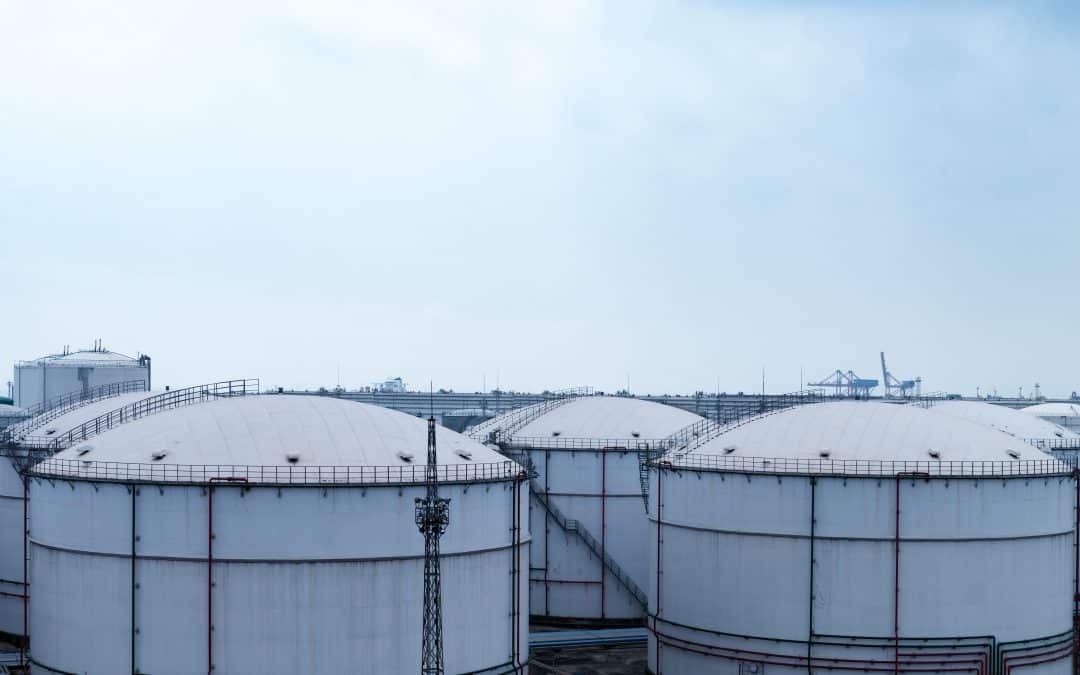
Installations By A Professional : In business for over 67 years, we have developed a reputation for the highest of quality service and support. While we began in the building and installing of floatplane and land-base airport fuelling services, we have expanded to offering fuel and fluid storage, vehicle wash systems and more. Over the last number of decades, installation of commercial fuel and fluid storage has become more essential than ever. Whether you are running your facility on propane or other fuel sources, we provide installations for all fuel sources.
Before installing your storage option, here are tips on how to choose the right fuel storage tank
Determine if you want an above or below ground unit
Above ground tanks can be less expensive to install, primarily because you do not need to dig into your property. In the long run, maintenance and repairs can also be less expensive to perform as it is more accessible. With this said, the above ground tank can be a concern in terms of managing risks of a largely exposed storage of liquid.
Below ground storage tanks can save you these risks, but are more expensive to install
In addition, they can also be more difficult to detect potential links. Buried storage tanks can be more costly to move after time, however, they can save you risks of overall exposure.
Consider the size of your storage option
Since tanks such as propane and heating oil are highly stable options, there are minimal risks in overall long-term storage; however, the larger the tank, the more expensive to deal with. It is important to assess what your business needs are so you can maximize the overall need for you and your team.
Here’s what to look for when searching for storage tank installations and professionals
Ensure your professional is a certified storage tank installation professional
As set out in the Storage Tank Systems for Petroleum Products and Allied Petroleum Products Regulations (SOR/2008-197), the system must be installed or removed by an individual who is approved to perform the work in the province that the system is installed. In the province of British Columbia, this licence or certification is certified as a “Petroleum Equipment Installer” by the Industry Training Authority of British Columbia (ITA).
Look for a professional who is committed to participating early on in the project
Working with a professional who prepared to work with or without completed drawings is essential. Installations are a collective project, and we are ready to work with projects that are anywhere between 50% to 80% complete. Installations professionals should have the ability to support projects that are mid way, so they can apply their experience along every step of the way.
Experience is essential when it comes to installation of any kind
As with any professional you decide to partner with, overall experience is essential to trusting installations success. At Western Oil Services, we have a wide variety of experience, one of which is with the Otter Co-Op. With this project, we installed 20 vertical tanks that were complete with pipe fitting and welding. We installed an underground DEP dispensing system, and connected the tank farm with retail and commercial card lock fuel islands. This project was completed in 2016, and was a great success.
Working with installations professionals is essential to any project, though especially so when it comes to the installation of fluid storage tanks. Before selecting a professional to partner with, be sure to inquire about past projects, experience in working with multiple industries, and overall familiarity with large scale projects. To learn more about selecting a professional for your next project, Installations By A Professional, click here to contact Western Oil Services.

Service and Maintenance for Fuelling Systems: We’ve frequently written about the importance of professional installations, including how to select the best partner for you, though one topic of conversation we have yet to share is is the importance of ensuring service and maintenance is always in top form. When you have invested in fuel and fluid storage, it is essential that service is also at the top of your priority list as we move through seasons.
Our certified technicians deliver unique solutions for industrial and commercial clients. We ensure complete service and maintenance coverage. This support continues even after installing your fuel and fluid storage.
Here’s what we look for in a service and maintenance check for your fuelling system
1. We will note expiration dates of your equipment
Before starting a service check, we identify current equipment. We note upcoming expiration dates and flag expired items. Then, we share a detailed report with you. It highlights any issues to address before proceeding with the service check.
2. We will offer to change the consumables
Before any inspection, we will provide you with the offer to change any of your consumables, such as hoses and fuel filters.
3. Ensure the fill boxes and caps are in good shape
We follow the manufacturer’s guidelines to check the fill boxes. This ensures they are clean and in good condition. We inspect for any needed repairs. Next, we monitor the caps closely. If replacements are required, we order and install them promptly.
4. Monitor tank banners for proper naming
Within the service and maintenance check, we will look at the tank banners and ensure that proper naming is included, so you are aware of the products that are inside the tank. This is essential to be aware of as an incorrect label will impact your business.
5. Monitor for environmental impact
We will take the time to check dispensers for any weeps, seeps and leaks, as this would undoubtedly have a negative environmental impact to your business.
6. Check the condition of hoses and nozzles
Much like we check the fill boxes for condition and cleanliness, we will check the condition of all hoses and nozzles for any sort of leaks, wear and tear, and expiry dates. This will help to ensure that your business is in top shape for the year ahead.
Why utilize Western Oil Services for service and maintenance?
As a client of ours, you are in excellent hands. You know that our team will stay in close communication in regards to your service and inspection needs. We understand that businesses impacted by weather related environmental impacts may be better suited for a less frequent service and maintenance check than those who are not. We will always work with you and your team to ensure that inspections are scheduled at a time that works for you, and that makes sense for your business. To learn more about getting started for an upcoming service and maintenance check, contact us for Service and Maintenance for Fuelling Systems

Our more traditional focus on retail gas operations has expanded over the last decade of Experts in Energy Handling. As our clients are increasingly focused on handling energy solutions, and ensuring their own business does not miss a step, we have evolved with them.
Today, we at Western Oil specialize in ensuring that the handling of our clients’ energy needs are met and monitored. With such rapid growth of hospitals, business and transportation sites, handling energy solutions have needed to pivot. That’s why we have evolved to provide customized solutions to support your business.
Here are the eight handling energy management practice categories that guide commercial and institutional buildings.
National Resources Canada outlines the following categories that help to guide handling energy for businesses.
1. Commitment
According to National Resources Canada, leadership in energy management needs to come from the top. A formal energy policy or vision statement that is approved and endorsed by senior leadership should be developed, and in alignment with your business goals.
2. Planning
In addition to the policy, an energy management plan should be in place. This plan should outline goals and objectives for energy management practices. In accordance with the Energy Management Best Practices Guide from Natural Resources Canada, it should address the following:
- What your organization is doing to manage energy
- What is the vision for overall improvement and optimization
- How your business plans to achieve your goals and objectives
3. Organization
The development of an energy management plan should be integrated within your organization and your organizational structure. As with any business, there needs to be a leader who is solely responsible for driving the goals and project plan forward. Without an individual taking clear ownership, the plan is at risk.
4. Projects
Energy management projects are large and vast, and they may require both capital and other measures to move forward. Questions to consider throughout the project process are:
- When did you last review how your facility is being maintained?
- Do you have equipment within your facility that is running and does not need to be?
- Are there areas that need to be retrofit?
5. Financing
Financing as it relates to handling energy management costs is essential, as a process does need to be created. As such, you must consider weighing the costs associated with new equipment and projects, so you can ensure your investment is spent appropriately.
Define your investment criteria that your organization will use, and ensure you have support from leadership.
6. Tracking
As with any project, you cannot manage it properly if you do not know what you are measuring. Tracking energy use data will allow you to properly assess your energy management activities, and understand if you need to invest in other energy storing solutions. Understand your metrics needed to measure positive ROI for your business.
7. Communication
With any business, communication is key. This involves overall awareness, celebrating successes and identifying actions that will impact handling energy and overall energy management.
Does your staff understand why energy management is important? Have you leveraged the full value of your energy management partner?
8. Training
With both your energy management partner and your own staff, training is an essential piece of building your organizations overall approach. Does your team understand the overall objectives and needs for your business? Is your energy management lead comfortable with the overall approach taken by your business?
By focusing on training for your business, you can identify any sort of gaps that could be human-caused.
At Western Oil Services, we are experts in energy management and handling energy solutions. Before you embark on a review of your current practice, consult with us so we can partner with your team to support you in the process. Click here to contact us today.

With the significant impact on the travel industry due to COVID-19, aviation is experiencing a period of Aviation Fueling Systems. During the month of May, air travel was down 68 percent compared to May 2019. During this time, aviation businesses may be looking at alternatives to current business practices, one being aviation fuelling systems.
What are aviation fuelling systems?
Aircraft engines need a fuel source in order to operate, and these may take the form of aviation gasoline (AVGAS). This aviation gasoline fuel system is designed to provide a flow of clean fuel from the fuel tanks to the engine.
For large airport facilities, they must run efficiently in order to provide the fuel quality that is required for today’s clean fuel and fuel tanks.
An aircraft fuel system allows the crew to manage the aviation fuel. Fuel systems differ due to the performance of the aircraft. Dependent on the aircraft, different fuel systems are used.
How to choose the right partner for you
If you run a transportation facility, be it rail, air, trucking or public transportation, you need to select a partner who understands all aspects of aviation fuelling systems. How can you choose the right partner for you?
1. Ensure your partner has established relationships
At Western Oil, we have established relationships with major fuel manufacturers and resellers in North America. This means we have the opportunity to generate excellent and competitive insight for our customers.
2. Extensive airport knowledge is essential
When working with a partner for your aviation fuelling system, it is important that your selected partner has extensive airport knowledge and experience. We are proud to work with 100 low lead fuel and we are insured to work with jet fuel and all aspects of aviation fuelling system. We have worked with clients like Helijet, YVR, Pitt Meadows Airport and more.
3. Preventative Maintenance Inspections are necessary
At Western Oil, we provide preventative maintenance inspections on fuel systems. This includes detailed inspections of your facilities to ensure that your system is well maintained, with potential wear and tear remedied.
4. Ask if your prospective partner offers fuel and fluid storage
There may be times when you need storage due to fuel overcapacity. For example, when planes are not flying with the same frequency. Our certified petroleum technicians provide solutions for commercial clients, from gasoline to diesel. We offer installation services for fluid storage.
This can come in the form of underground or above grade storage tanks.
At this time, you may be searching for different Aviation Fuelling Systems options, due to an impact on the global, national and local aviation industries. At Western Oil, we provide such services to clients just like you.
To learn more about our custom solutions, connect with us here.
