
Commercial Property Owners Guide to Emergency Power
If you own a commercial property, you know there’s lots to think about in addition to filling the spaces with tenants. Safety and security is a big deal, and that includes taking care of things such as making sure the power stays on even when there’s an outage caused by storms or some other natural or manmade situation.
When your power goes out in your own home, you know what to do. If you have a generator, you can get it going so that you’re able to restore the power you need to get on with your daily life. However, those in a commercial property – be it residential or business – may not know what to do when power outages occur, so it’s up to you – the property owner – to have plans in place and to relay those plans and processes to your tenants.
Power outages can leave tenants both flustered and frustrated, especially if they don’t know what to do when one happens. That’s why it’s a wise idea to put things in writing so that tenants know where to turn when the lights go out.
Let’s consider this a bit more in-depth.
Ways to avoid power outages
Of course, some power outages will have no bearing on any steps you take to avoid them. They will happen anyway due to issues with your power company and so forth. But there are ways you can address other issues that may cause outages.
If electrical storms are a huge problem in your area, lightning arrestors or lightning “rods” are a wise idea. Storms are indeed the most prevalent cause of outages and addressing lightning strikes with something as simple as a rod can save you plenty of time and money.
If your property includes a lot of trees, keep them trimmed and away from wires. Get rid of any loose branches that could break free and cut down any trees that seem to be unhealthy. You don’t want those trees to fall on wires or on anywhere else where they can cause outages or other kinds of damage.
Wildlife can also be a concern. If you’ve got wires that can be accessed by animals, be sure to erect barriers that will keep them out so they can’t chew through them and cause outages. Money spent on a fence or other safeguard will, again, save you money in the long run.
Invest in standby power sources
Whether you own an apartment building or a business complex, you likely understand how important it is for your tenants to enjoy uninterrupted power. This is especially true for companies who will lose valuable time and money if they experience downtime. Just think of the customers lost or data that can’t be accessed when there’s no power.
As such, you’ll want to investigate a back-up generator for your commercial property. There are a variety of options available, including propane, diesel, and natural gas generators. Speak to an expert to determine which type and size is right for your application.
Back-up generators work by automatic transfer. In other words, as soon as your primary power goes out, the generator begins to do its work. When your main power is restored, similarly, the generator switches off and you’re back to using your primary source. Most are programmed to kick on in just seconds so that there’s little to no interruption. It’s that easy.
Have a plan in place
So, you’ve considered what to do for back-up power and how to handle other factors around your property that may be the impetus for a power failure. It’s also important, however, to relay to your tenants what they should do in case of an outage and in case any back-up power supply does not function as it should.
What to include in your tenant handbook:
- Who your tenant needs to call in case of an outage. You can have them call you or simply call the power company directly, if necessary. Include specific instructions on how to reach you or the person you’ve appointed to be in charge of such events.
- Provide “shelter in place” instructions in case the power outage involves a situation that could put your tenants in danger. For example, if you have a communal area in the building, everyone might be instructed to go there. If your commercial property is a large structure, include a map of the building.
- Provide your tenants with emergency supplies that can help them when a power outage occurs. This could include flashlights, other battery-operated light sources, and – of course – extra batteries. Store them in an easy-to-find location.
- Attach these plans to the lease and also post another copy where it can be easily retrieved by residents or business tenants.
Being well-prepared will reflect well on you as a landlord or property owner and your tenants will appreciate the fact that your forethought will keep their homes or businesses running without interruption. Western Oil Services can provide you with more information about back-up power for those pesky outages and are eager to help you find the right solution for your back-up power needs, regardless of the size and scope of your property. For more information, contact us at 604-514-4787.
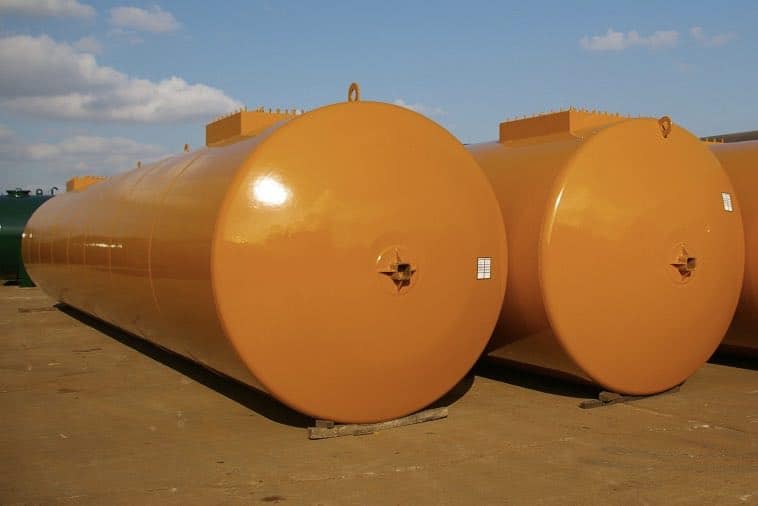
An underground storage tank (UST) is a storage tank with underground piping connected to the tank. It must have at least 10 percent of its combined volume underground. National and provincial regulations for these tanks apply to USTs storing petroleum. Biofuel blends and certain hazardous substances are included.
If you operate an underground storage tank, maintaining it is important so that leaks or other problems do not occur. Keeping an eye on your tank is essential. The environment or people who live near your tank shouldn’t be affected by unsafe issues. Releases from USTs can threaten human health and contaminate both soil and groundwater. Thousands of leaks happen worldwide each year, so close attention to the condition of your tank is paramount.
So, what should you be doing as the person responsible for underground storage tank maintenance?
Appoint and train employees for regular underground storage tank maintenance
It’s important to select a few reliable individuals to take care of the maintenance of your underground tanks. You want consistency in this job, so choose employees who are reliable and who you trust to do a good job. Make sure they are aware of the potential hazards of this particular duty. Also, assure them that if protocols are followed, there shouldn’t be a problem.
Thorough training is essential. Each person responsible for this task should be trained identically and participate in training exercises together. When personnel needs to be replaced, be sure that those currently responsible for underground storage tank maintenance are involved in training the new person.
Employees who take on this job should work well together, so select individuals who pair well. It’s a big undertaking. The last thing you want is tension between your workers.
Schedule times for underground storage tank maintenance and inspection
When your tank was installed or when you took over responsibility for the tank, you likely received an overview of how it works from the tank installer or the previous owner. They probably gave you suggestions for how often the tank needs to be inspected or when routine maintenance procedures should be conducted.
Stick to a regular schedule, whether daily, weekly, or monthly. You may find that you must inspect the tank daily for certain things and less often for others. Review these with your maintenance workers so that the schedule remains consistent and no problems are missed.
Keep a checklist
You probably have a handbook about your equipment and how it operates. This may be from the installer, or it may have been provided to you by your province or state. You should also have a checklist that provides you with a list of everything that must be inspected and how often.
Primarily you will be looking for potential leaks and can use several different options to detect a release, such as groundwater monitoring, manual tank gauging, or vapour monitoring, to name a few. These are generally conducted every 30 days.
Furthermore, you must maintain the results of any testing you conduct, so be sure to have a foolproof system that allows you to file these reports where they can be easily retrieved, if necessary. This is a RULE, not an option, so abide by it.
Getting help with maintenance
If this all sounds overwhelming to you, it’s important to recognize that though maintenance is essential to be regular and consistent, you don’t have to do it yourself or select employees to do the work. You can hire a company like Western Oil Services to inspect and complete maintenance procedures or repairs.
We perform visual inspections for fueling systems and provide a comprehensive report indicating whether action is required. Following the manufacturer’s standards and recommendations, our inspectors check the following:
- Fill boxes for condition and cleanliness, caps are in good shape
- Tank banners for proper naming indicating which products are inside each tank
- Dispensers for weeps, seeps, and leaks (environmental impact)
- Condition of all hoses and nozzles for leaks, unusual wear patterns, and expiry dates
You can rely on us to stay in touch regarding your maintenance needs, offering you the services you require when you need them and working with you to accommodate your schedule. We understand that the safety of your employees is paramount, so you can be sure our inspections are thorough and according to regulations.
To learn more about our underground storage tank maintenance programs, call Western Oil Services at 604-514-4787.
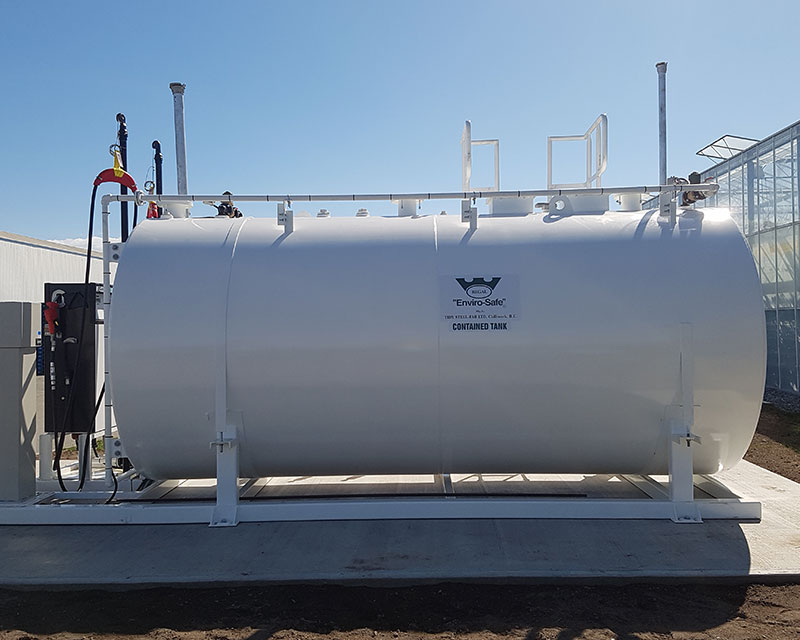
An above-ground fuel tank can be a very convenient feature of your business. It allows you to purchase fuel in bulk for your fleet of vehicles, which often results in plenty of money saved. However, it’s essential that you not only follow all the federal, provincial, and local regulations governing such storage tanks but also that you maintain them to prevent safety hazards and to keep them free from water and contamination. You’ll also need to make all necessary repairs or arrange for a professional to do so when required.
In general, owning or managing an above-ground fuel storage tank means you always need to be on the lookout for things that may not be operating correctly and must maintain the tanks in the best conditions.
Above-Ground Fuel Tank Cleaning
If the product inside is changed or altered, your storage tank needs to be cleaned. This helps prevent contamination from one product to another.
However, this can be quite a dangerous job. You should have a trained crew on hand or hire a company that’s skilled in this task. Here’s what needs to happen.
- Entering the tank itself is the most dangerous part of above-ground fuel tank maintenance. As such, any team that does this must have proper training, certification, and insurance. This protects those entering the tank and the owner or client.
- In addition, a daily on-site meeting should take place to review all safety issues and concerns. Furthermore, a site-specific health & safety plan should also be in place and followed and maintained at the worksite. This ensures the safety of the workers.
- You should put blinds and blanks in place to ensure positive shut-off. Also, set up a decontamination area.
- The crew MUST have the proper personal protective equipment for this job, rescue gear, and a supplied air (SCBA) system. Other necessary gear includes vacuum trucks, pressure washers, and confined space entry equipment. The crew will use the pressure washer to clean the floor and wall. Vacuum trucks will remove the water, rinse and sludge and then transport all waste to a licensed disposal location for recycling.
- Throughout all this, a properly calibrated air monitoring system should be in place for measuring the atmosphere inside the tank to ensure it’s safe for the crew. You MUST vent the tank throughout the cleaning process.
Monitoring for contamination
It’s pretty easy for an above-ground tank to become contaminated when the lids are open. They’ll suck in all sorts of debris, causing a problem with the fuel stored inside. As such, you should take preventative measures year-round. Ask your fuel supplier or tank installation company how to prevent contamination.
Checking for water
Owners or managers of above-ground fuel storage systems should take periodic samples to determine if the tank has separated water. Then they will need to send the samples to a lab for analysis, and if water is present, you’ll have to remove it with a hose, and the tank will need to be cleaned (see above).
Training is essential!
Anyone who works around an above-ground fuel storage tank should be trained in the procedures that will keep them safe. It is also necessary for maintenance to happen at regular intervals as this will ensure the safety of anyone who works in the vicinity of the tanks, including those not responsible for maintenance. Eliminating risk is paramount!
If you prefer to refrain from training and certifying your staff to do these maintenance tasks independently, the professionals at Western Oil Services can handle maintenance for you. We have the most experienced team of service technicians in British Columbia, and we are training our next generation of techs through a new experience-based trade program.
We will stay in touch with you regarding your service and inspection needs and are readily available in emergencies or when you need essential repairs made promptly. We’ll also work closely with your schedule to ensure we do inspections and other routine maintenance on a timeline that fits your schedule.
For more information about installing and maintaining above-ground fuel tank storage tanks, call us at 604-514-4787.

Let’s face it. Fuel costs a lot of money, especially these days. With gasoline prices continuing to rise, the cost of fleet fueling is likely the biggest concern of anyone who owns a business involving many trucks or cars.
Add to that all the other particulars, like the safety guidelines associated with any fueling systems, and it’s clear to see that installing a fleet fuel system can be a pretty complicated (and expensive) undertaking for commercial property owners.
However, installing an onsite fleet fueling system has plenty of benefits. With some research, you’ll discover you can save a substantial amount of money by fueling your vehicles on your own rather than at someone else’s establishment.
Benefits of fleet fueling systems
Some benefits of setting up a fleet fueling system on your property:
- Eliminate the need to go to retail stations for gas or diesel. This is a time and money saver. You’ll undoubtedly recognize the advantages.
- You’ll get a good return on investment. Research shows that you’ll typically get your money back in full in about two years. Therefore, this is a very affordable proposition.
- It’s an excellent way to track when fuel goes into your vehicles and how much is used. Many fuel tracking systems make keeping records for each of your vehicles more manageable than ever.
Installing a fleet vehicle fueling system
A fleet fuel system installation can be complicated. Primarily, this is because you must follow all the national and provincial rules. Compliance with various codes is essential. You’ll need to work with someone who knows all the ins and outs of these guidelines and regulations.
At Western Oil Services, we begin each fleet fueling installation with an in-depth meeting with the commercial property owner. We discuss their wishes and needs. Then we aim to design a plan that meets both those needs and any regulatory requirements. These requirements can be imposed by British Columbia or any municipality where we work. Once the plans are approved by the client or adjusted, we submit the final specifications to the proper authorities for approval if necessary. This can take some time, but in the meantime, we’ll ensure all the pieces are in place to install the system promptly once approval arrives.
The system will feature all the components necessary to meet the fleet’s small or large needs. This will include above-ground or underground tanks, electrical systems, concrete pump islands, tank aprons, and weather canopies where necessary.
During the installation process, our experts are always on hand to inspect the work to ensure it is properly completed. This includes testing all fueling components, and pressure testing of the tank and product lines. It also includes cathodic protection certification, and hydrostatic containment testing. Furthermore, it includes BC Safety Authority inspection, and arranging for any other final inspections by local or provincial authorities.
Hiring a specialist
It’s easy to ascertain that designing and installing a fleet vehicle fueling system isn’t a quick project. It requires the expertise of specialists familiar with all aspects of the design of such a system, whether it’s a single tank for a few dozen cars or a substantial multi-pump system meant for an extensive fleet of vehicles.
Western Oil Services boasts more than 70 years of experience in energy handling and are specialists in fuel installations. We design our own systems or work with designers who are also experts in fleet fueling systems. In addition, our techs and installers are also trained on a complete range of products and certified for warranty installations and servicing.
Over the last seven decades, we have served numerous industries and completed hundreds of installations in BC, Ontario, Alberta, The Northwest Territories, and the Yukon, allowing us to be recognized for our expertise far beyond our home base. Thanks to our familiarity with the different regulations in every municipality, and particular criteria for federal lands and First Nations territory, we serve as an advocate for our customers, one that knows and understands the system no matter where the project is located.
For more information about our products, call Western Oil Services at 1-800-663-2097.

If you own a Commercial Property Owners on which you plan to build an aviation fueling system, there are plenty of rules you’ll need to follow to adhere to the guidelines set up both nationally and provincially. When it comes to dealing with fuel, most rules are put in place to ensure the safety of the individuals who use the facility as well as those who live nearby. Fuel is highly flammable and, of course, can also contaminate things such as water and soil, so strict adherence to these guidelines is essential for Commercial Property Owners .
Fuel Storage
When designing your fuel storage, focus on your current and future needs. Will your facility grow in the next five years? Will you service more aircraft? If so, plan for expansion now to avoid costly upgrades later.
Choose an experienced vendor from the start. Look for a company with expertise in aviation fuel storage construction and design. They can guide you through the entire process.
Decide if your tanks should be above ground or underground. Consider perimeter fencing, bollards, fire safety measures, fuel transfer points, filtration needs, and more. A fueling system expert can explain these details and how they apply to your situation.
Inspections
With aviation fueling systems on your property, you’ll need to perform routine fuel inspections frequently, or train some of your personnel to handle it. Completing all the regularly scheduled inspections of the fueling equipment are essential in order to meet safety standards and for maintaining quality as well.
You’ll have a long list of things you need to check daily as well as monthly, quarterly, semi-annually, and annually. Some of these include:
Daily –
You’ll need to inspect the system each day for issues such as fluid leaks and fire safety concerns and will need to check hoses, nozzles, dust covers, bonding cables, and tank sumps. You’ll want to make sure you have personnel that’s been thoroughly trained to do these daily checks.
Monthly –
Each month, you’ll need to do a filter membrane test, check fuel hoses for cuts or abrasions, remove and replace fuel nozzle screens, verify that the proper signage is in place, check all fire extinguishers, and check levels for fuels with additives. These checks should be scheduled for the same day each month (i.e., the 1st or 15th, perhaps) for the purpose of continuity and thoroughness.
Quarterly –
Every 3 months, you’ll need to check pressure controls, the emergency fuel shutoff system, the water defense system, and the overfill protection equipment. Satisfactory operation should be verified for all of these components.
Semi-annually –
Hose pressure checks should be made at least twice per year as well as other checks recommended by your vendor.
Annually –
Inspect fuel storage tanks every year. Look for coating damage and other obvious issues. Check filter differential pressure gauges, nozzle fueling pressure gauges, operating tank vents, line strainers, and meter calibration. Review any components missed during periodic checks.
This process can be overwhelming. That’s why partnering with experts is crucial when entering aviation fueling. Western Oil Services installs the products it sells. We collaborate with top manufacturers like OPW to design and build systems tailored to your needs.
Our maintenance team handles regular inspections. We ensure your system runs smoothly and meets local regulations.
For more information and details about aviation fueling systems Commercial Property Owners , call us at 1-800-663-2097.

Fueling systems at marinas are more than just petrol stations on the water. While there are certainly some similarities between the two, there are plenty of differences as well, and it’s important to know the ins and outs of marine fueling systems before you decide you want to build one on your waterfront commercial property.
If you will be serving small, private recreational watercraft, there are things you should certainly know about basic rules and regulations, codes, and standards for marine fueling systems. Here we offer a guide to help you navigate your project.
Safety
Today’s marinas offer more than fuel. Many resemble convenience stores on land. They provide food, drinks, and other essentials for boaters. This makes fueling system safety critical, as marinas are often busy and crowded.
Fire and environmental regulations apply to service stations and marine fueling systems. Marine stations face extra rules due to their proximity to water. Spills can harm drinking water, wetlands, and wildlife.
Property owners with fueling systems must know fire regulations. Gasoline can ignite quickly, leading to fires. These fires can cause property damage and loss of life.
Fire codes cover piping, moving docks, tank elevation, static discharge, and more. Worker health and safety must always be a priority.
Tank requirements
Marine fueling facility tanks are above ground. This design protects the water table. It also works well with rocky terrain and local soil conditions.
Tank placement depends on the type. Fire-resistant tanks can be near public areas. Uninsulated tanks must stay farther away. Double-wall tanks usually face fewer restrictions. Always review municipal codes for specific rules.
Every tank needs an emergency vent. This vent releases pressure during a fire. Without it, pressure builds quickly and can cause explosions. Such events result in severe damage, injuries, or even fatalities.
Preventing damage
The owner must also place system components so that they are in a location that offers low risk of damage, either accidental or on purpose. Tanks should be away from high-traffic areas or protected by barriers while dispensers, hoses, nozzles, and other components need to be further protected from damage due to collision with motor vehicles or watercraft. Furthermore, boaters should be forbidden to do things such as tie up to the fuel line, which is a recipe for disaster.
Moreover, These are just a handful of the parameters that must be followed when building a marine fueling facility on a commercial property. There are many more rules and regulations that most be abided, which is why it is essential to hire a company that’s well versed in the laws of your municipality as they relate to marine fueling systems.
Western Oil Services has nearly 70 years of energy handling experience and has long been a distributor for many of the petroleum industry’s top manufacturers. The experts at Western install and service underground and above grade storage tanks and piping as well as the dispensing equipment for retail customers. They are eager to consult with you about your marine fueling system needs.
For more information or to set up a consultation with one of our professionals, call us at 1-800-663-2097 or head to www.westernoilservices.com for details on all our products and services.
